
We covered DALI - the most widely used standard - in a separate article. Here’s a brief overview of other digital wired protocols that are common in lighting control.
Smart Home Integration
KNX is frequently used in smart residential building projects. It communicates over a dedicated KNX twisted-pair cable at 9.6 kbps. Key strengths include reliability and scalability. Key drawbacks include the high cost of hardware and software, and the need for a trained specialist to commission the system.
KNX can control lighting along with other smart-home subsystems. In practice, though, lighting is often controlled through a KNX–DALI gateway, because DALI-enabled LED fixtures are mass-produced and typically cost less than fixtures with native KNX support.
Dynamic Lighting Effects
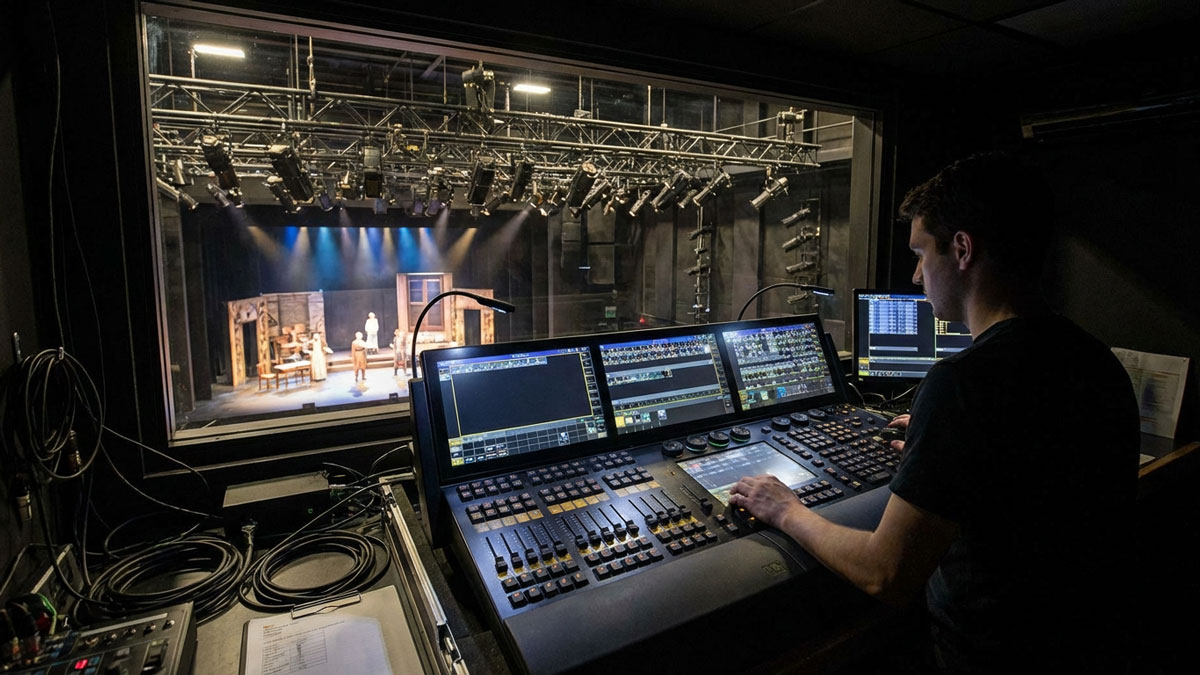
DMX512 is the de facto standard for stage lighting. Its RDM extension enables fixture status monitoring. DMX512 is based on the RS-485 industrial interface and uses the same type of cabling. With a data rate of 250 kbps, it supports fast changes to lighting parameters. Beyond theaters and concert venues, DMX512 is used in architectural lighting and, in premium residential projects, for interior lighting as well. The main downside is higher equipment cost.
In the mainstream market, SPI is becoming more common and is also known for high speed. Because SPI is widely used in industry, most modern microcontrollers include it out of the box, which helps keep lighting controllers inexpensive—often without any extra interface chips. SPI is most commonly used for LED strips and decorative string lights. The downside is limited standardization beyond the basics, which can lead to cross-brand incompatibility.
Commands Over Power Lines
Another group of digital protocols sends control commands over the power wiring itself. The oldest is X10 (introduced in 1975). It controls lighting and other smart-home devices. X10 is now considered obsolete, and little to no new equipment is being developed. Still, X10 devices are still sold in the United States to support existing installations.
PLC is a newer approach. It can control many kinds of devices but is most widely used for street-lighting control. A variant called PLC‑DC is used on safe extra-low-voltage DC power systems and is deployed in industrial environments.
Today, PLC systems are most commonly used where highly reliable, safety- or mission-critical equipment is installed and where RF interference could disrupt operation.


